
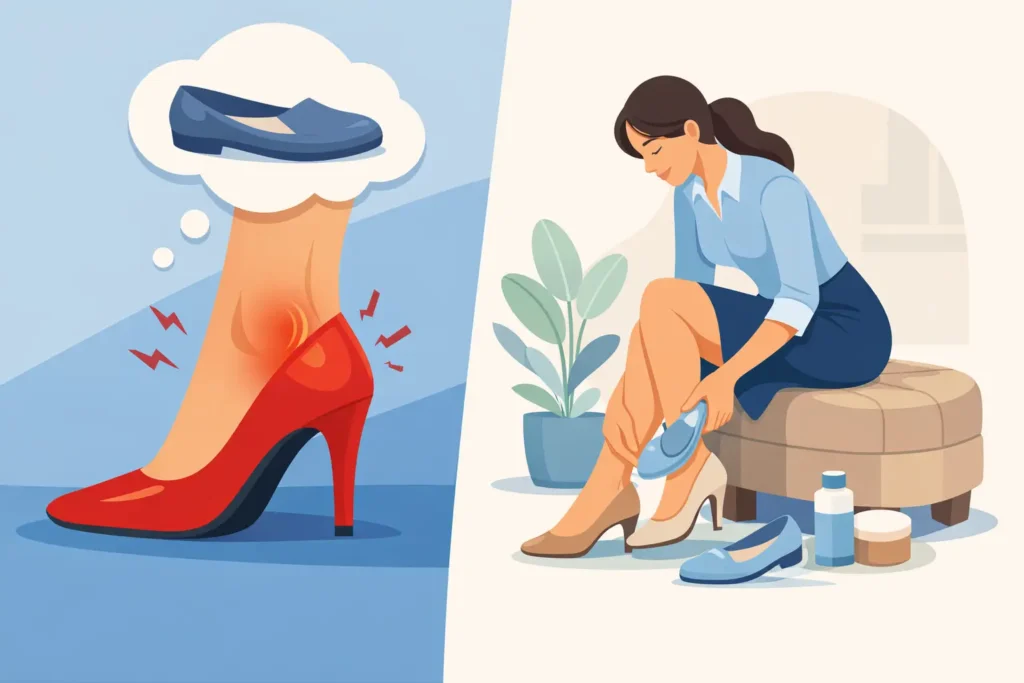
A pair of heels can turn a simple mini dress, jeans, or going-out set into a full look, but do heels hurt because they are supposed to? Not necessarily. A little adjustment when you switch from sneakers to a lifted shoe is normal. Sharp pain, numb toes, blisters, or the urge to take them off before you leave the house is a sign that the fit, height, or shape is working against you.
The goal is not to give up the confidence of a chic heel. It is to choose a pair that supports your plans, whether that means drinks and dancing, a vacation dinner, a party, or a polished everyday outfit.
Why Do Heels Hurt in the First Place?
Heels move more of your body weight toward the ball of your foot. The higher the heel, the more pressure your forefoot takes on. That is why the burning feeling under the toes can show up long before the night is over, especially in thin-soled shoes.
The toe box matters just as much. A pointed or narrow front can look sleek with a backless dress or tailored pants, but if it squeezes your toes together, it can create rubbing, blisters, and tingling. Your feet should not feel compressed just because the silhouette is fitted.
Then there is stability. A slender stiletto asks your ankles and calves to do more balancing than a block heel or platform. If you are walking on uneven sidewalks, standing at an event, or spending hours on a dance floor, that difference becomes very real. Style has trade-offs, and the best choice depends on where you are going and how long you will be on your feet.
Your feet can also change throughout the day. Heat, travel, standing, and even a salty meal can cause mild swelling. A pair that fits perfectly at 9 a.m. may feel tight by evening. This is one reason trying on new heels later in the day usually gives a more realistic sense of comfort.
How to Choose Heels That Feel Better
Comfort starts before the first step. Rather than choosing only by heel height, look at the full structure of the shoe.
Start with a manageable heel height
If you rarely wear heels, a 2- to 3-inch block heel is a strong place to start. It gives your outfit lift and shape without putting the same intense angle on your foot as a very high pump. A wider heel also gives you a more grounded stride, which can make you feel instantly more confident.
Platforms are another fashion-forward option. Because the front of the shoe is raised too, the difference in height between your heel and toes is smaller than it looks. A 5-inch platform heel can sometimes feel easier than a 4-inch non-platform style, although the added sole height still takes practice when walking.
Make room for your toes
A square toe, almond toe, or softly rounded toe often gives your toes more space than a sharply pointed design. That does not mean pointed heels are off-limits. Consider saving them for shorter occasions, such as dinner, photos, or a date where you will mostly be seated.
When trying on a pair, stand up and walk on a hard surface if possible. Your toes should not hit the front, and your heel should not lift dramatically with each step. Sizing up can help if a style runs short, but a shoe that is too wide may create friction and sliding. Fit is about both length and secure hold.
Pay attention to straps and materials
Ankle straps can add stability, especially on sandals and platform styles, but they should feel secure rather than restrictive. If a strap leaves deep marks after a few minutes, it is likely too tight for extended wear. Adjustable buckles are helpful because you can make small changes as your feet warm up.
Soft uppers, cushioned insoles, and soles with some grip can make a bigger difference than a shoe’s appearance suggests. Stiff materials may loosen slightly with wear, but do not count on painful shoes transforming overnight. Buy a pair that feels good from the beginning, not a pair you hope to survive until it breaks in.
Make New Heels Party-Ready Before You Wear Them Out
Never make a first wear a full-night commitment. Break in new heels at home on a clean floor for 20 to 30 minutes at a time. Practice walking, turning, sitting, and standing. You will quickly notice whether a strap rubs, the shoe slips at the heel, or your toes are being pushed forward.
Add a thin ball-of-foot cushion if pressure builds under the front of your foot. Heel grips can help if the back rubs or slips, while blister bandages are useful for places you already know tend to chafe. These small accessories are not a substitute for proper fit, but they can make a well-fitting pair more comfortable for a long event.
For leather or structured materials, gentle stretching can help with a tight spot across the toes. Be cautious with delicate finishes, clear materials, satin, or embellished shoes. Pulling aggressively at them can affect their shape and finish. When in doubt, choose a different size or silhouette instead of forcing a shoe to change.
How to Wear Heels Without Ending the Night Early
The way you walk affects how heels feel. Take shorter steps than you would in flats, and let your heel touch down before your toe when the heel shape allows it. Rushing with long strides can put extra strain on your ankles and make even a beautiful pair feel unstable.
Give your feet mini breaks. If you are at a party, sit for a few minutes between songs or while catching up with friends. If you are headed to dinner, consider walking from the car in comfortable flats and changing into your heels when you arrive. That is not less glamorous. It is smart styling that lets the shoes look fresh when they matter most.
For a night out, bring a compact backup option if your bag allows. Foldable flats, sleek sandals, or comfortable slides can save the walk to the car without taking away from your main look. You can also plan your outfit around a heel that suits the occasion: dramatic platforms for a club, lower heeled sandals for a rooftop dinner, and a stable block heel for a wedding or day event.
At Kalyx Glory, the most versatile heel is not simply the tallest one. It is the pair that lets you wear your bold fashion statement with good posture, a natural smile, and enough comfort to stay present in the moment.
When Heel Pain Is Not Just a Fit Issue
Mild fatigue after a special occasion is one thing. Persistent pain, swelling, numbness, pain that lasts into the next day, or repeated issues in the same part of your foot deserve attention. You may need a break from heels, a different style, or advice from a qualified medical professional, especially if you have a past foot or ankle injury.
Do not try to push through sharp pain for the sake of an outfit. The confidence of a great look comes from feeling like yourself, not from pretending you are fine while every step hurts.
A heel should add a little drama to your outfit, not take over your entire night. Choose the height and shape that match your plans, test new pairs before the big moment, and give yourself permission to switch shoes when your feet ask for it. The best finishing touch is being comfortable enough to walk in like you mean it.